
York Racing Results Today: Live from the Knavesmire
 Available in US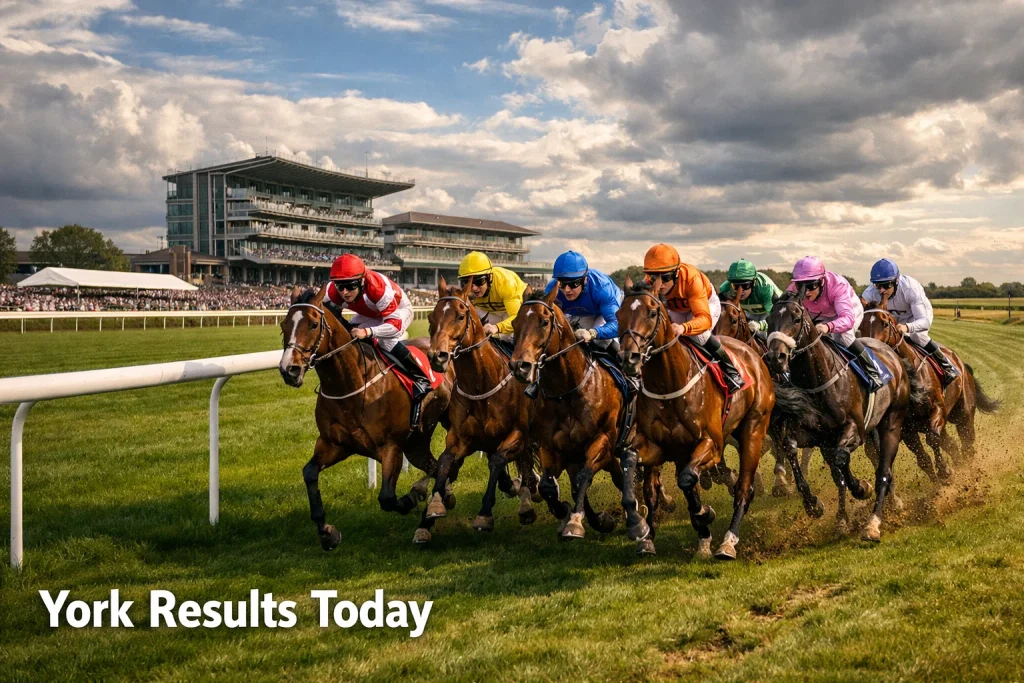
York racing results resonate with a quality that matches any course in Britain. The Knavesmire stages racing that belongs in the top tier of the flat calendar—the Ebor Festival in August rivals Royal Ascot for depth of competition, and the course's Group 1 contests attract champions from across Europe. Results from this Northern powerhouse deserve attention from any serious form student.
The track configuration suits proper racehorses. Left-handed with sweeping bends and a relatively short home straight, York rewards horses who stay galloping and handle competitive racing. There are no hiding places on the Knavesmire; results reflect genuine ability rather than positional fortune or track quirks. According to the BHA Racing Report, Premier flat racing records average field sizes of 10.95 runners—competitive handicaps that produce robust form.
York sits at the heart of Northern racing, and the racecourse management takes evident pride in the quality of fixtures delivered. With 1,410 fixtures completed across British racing in 2024, York's contribution represents the pinnacle of what Northern courses offer.
The Knavesmire Track Characteristics and York Racing Results
The Knavesmire traces its name to medieval history—the land was once used for executions, lending an appropriately dramatic quality to racing's modern use of the site. The course itself favours galloping horses who can maintain rhythm around broad turns. The track measures roughly two miles around, with races run over various distances from five furlongs to two miles and two furlongs.
The home straight at York, though relatively short at approximately four furlongs, often produces thrilling finishes. Results frequently show two or three horses crossing the line within lengths of each other, separated by courage and determination in the closing stages. The configuration rewards jockeys who time their challenges expertly—commit too early and rivals come back at you; leave it too late and the line arrives before you've got there.
Ground conditions at York tend toward the quick side during summer, though the course handles significant rainfall without becoming unraceable. Results on good-to-firm ground favour speed horses, while cut in the ground brings stamina into sharper focus. Tracking conditions across meetings helps explain why certain horses outperform or underperform their form figures.
The draw influences results over sprint distances, with lower numbers generally favoured along the stands rail. Over middle distances and beyond, the draw matters less because horses have time to find their preferred positions. Results from York sprints should be assessed with draw position in mind, particularly when margins are tight.
Drainage and course preparation at York meet high standards. The track rarely presents surprises—results reflect what happens on the day rather than unexplained vagaries of ground or configuration. This predictability makes York form reliable currency at other tracks where similar conditions apply.
The Ebor Festival: August's Northern Showcase
The Ebor Festival in mid-August represents York's flagship meeting, four days of championship racing that attract fields rivalling Royal Ascot in quality. The Juddmonte International, a Group 1 contest over ten and a half furlongs, brings together the best middle-distance horses in Europe for a race that frequently determines end-of-season honours. Results from this contest shape thinking about Arc contenders and future stallion prospects.
The Ebor Handicap itself, the meeting's namesake, offers the richest flat handicap in Europe run over a mile and three-quarters. Results from this cavalry charge of twenty-plus runners attract intense scrutiny—the Ebor tests stamina, form reading, and horsemanship in equal measure. Winners tend to be lightly raced improvers who have slipped under the handicapper's radar.
The Yorkshire Oaks provides a serious test for middle-distance fillies and mares. Results here inform thinking about the following month's St Leger and, more recently, the Prix de l'Arc de Triomphe. The race has produced champions whose names resonate years after their victories.
The Nunthorpe Stakes brings pure speed to the festival—five furlongs run at a pace that separates genuine sprinters from pretenders. Results from this Group 1 dash influence breeding decisions for years, as speed sires command premium fees and their offspring populate sprint programmes worldwide.
The Gimcrack Stakes identifies future stars among the two-year-old generation. Results from this contest often preview the following season's Classic picture, with winners progressing to Group 1 success at three. The race's after-dinner speech tradition, where the winning owner addresses the Gimcrack Club, adds cultural significance to the sporting importance.
For punters, the Ebor Festival concentrates high-quality information into four days. Form from the meeting tends to prove reliable because fields are strong and competition fierce—beaten horses frequently win subsequently at other tracks.
Flat Season at York
York's flat season runs from May through October, with fixtures spread across the summer months. The Dante Meeting in May traditionally serves as a Classic trial card, with results from the Dante Stakes itself indicating which colts are ready for Epsom Derby contention three weeks later. The race has produced numerous Derby winners, making its results essential viewing for Classic enthusiasts.
The Musidora Stakes at the same meeting performs a similar function for the Oaks. Results from this ten-furlong fillies' contest identify those with the stamina and class to handle Epsom's unique challenges. Trainers treat the Musidora as a genuine trial rather than a confidence-boosting exercise, which gives the form substance.
Summer fixtures at York maintain quality between the major meetings. The John Smith's Cup in July attracts a competitive field of handicappers, while Listed races throughout the season provide stepping stones for horses progressing toward Group company. Results from these fixtures keep form students busy across the summer months.
The October meeting closes York's season with valuable racing as horses conclude their campaigns. Results from this fixture inform thinking about next season—horses who stay training on through October demonstrate the durability that breeders value highly.
Key Races and Group Contests
York's Group 1 programme includes the Juddmonte International, Yorkshire Oaks, and Nunthorpe Stakes during the Ebor Festival. These contests attract international raiders and generate results with global significance. When a horse wins a Group 1 at York, the form franks strongly because the opposition is invariably top-class.
Group 2 contests at York include the Dante Stakes and Great Voltigeur, both races that identify Classic-calibre performers. Results from these ten-furlong-plus contests reveal which horses possess the stamina for championship middle-distance racing. The Great Voltigeur, staged during the Ebor Festival over a mile and four furlongs, has produced multiple St Leger winners.
The Sky Bet Ebor and John Smith's Cup represent York's premier handicaps, races that test form reading as much as horse quality. Results from these big-field handicaps reward punters who identify progressive horses still ahead of the assessor. The concentration of competitive runners ensures that winners have beaten substantial opposition.
The Lowther Stakes and Gimcrack Stakes identify the best juvenile fillies and colts respectively. Results from these contests echo through the following season, when winners reappear as Classic contenders. Tracking juveniles from their York successes forward often proves profitable in Classic trials and beyond.
York Form: Analysis and Patterns
York form tends to work out strongly at other tracks because the course asks proper questions without introducing unusual variables. A horse winning at York has demonstrated the ability to handle competitive racing on a galloping track—skills that transfer to Newmarket, Ascot, and similar configurations. Results from the Knavesmire deserve respect when the same horses reappear elsewhere.
Beaten horses at York often prove profitable subsequently. When a field contains genuine Group-class performers, those who finish close up without winning have run to a high standard. Tracking horses beaten small margins at York frequently identifies value opportunities when they drop in class or tackle less demanding opposition.
Course-and-distance form at York carries meaningful weight. Horses who have won over a particular trip on the Knavesmire have demonstrated that they handle both the configuration and the stamina demands. Results from previous visits inform thinking about current chances, particularly when conditions match.
The trainers who do well at York tend to be those with quality horses and proven records at the course. Results often follow predictable patterns with handlers who understand the track's demands and prepare their runners accordingly. Noting which trainers have strong York records helps when assessing fields for upcoming races.
For punters seeking reliable form, York delivers. The combination of quality fields, fair track configuration, and professional management produces results that can be taken at face value and applied confidently to assessments of future races.
