
Stewards' Enquiry Explained: When Racing Results Change
 Available in US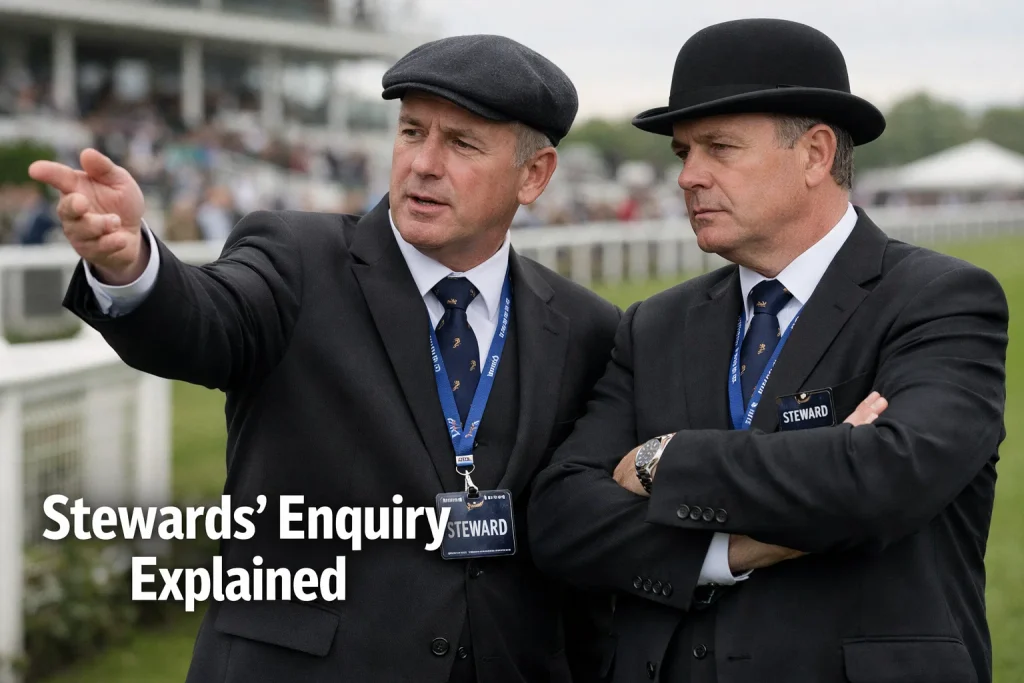
A stewards' enquiry signals that the official result remains provisional until officials review the race. These investigations examine potential interference, riding offences, or other irregularities that might affect placings. Understanding what triggers enquiries—and how they're resolved—helps punters interpret results that carry the dreaded "subject to stewards' enquiry" notation.
British racing's integrity infrastructure, supported by £19.4 million in Raceday Services Grants funding 1,482 fixtures annually, ensures consistent stewarding across all courses. The fatality rate of just 0.22% across British racing reflects rigorous safety standards that stewards help maintain. When results are reviewed, the process protects both horse welfare and betting market integrity.
Results can change following enquiries, reversing finishing positions and altering betting outcomes. Punters who backed disqualified horses lose their bets; those whose horses get promoted collect unexpected winnings. The uncertainty during enquiries creates nervous moments for anyone with stakes riding on provisional placings.
How Stewards Enquiries Work and Change Official Racing Results
Stewards watching the race may call an enquiry immediately if they observe potential interference or rule violations. Alternatively, jockeys, trainers, or officials can lodge objections that trigger formal investigation. Either route leads to the same process: careful review of evidence before reaching a decision.
The enquiry panel comprises racecourse stewards—typically three experienced officials trained in racing rules and procedures. They examine multiple camera angles showing the incident in question, review sectional timing data, and hear testimony from jockeys involved. The process prioritises thoroughness over speed, though decisions typically emerge within fifteen to thirty minutes.
Jockeys attend enquiries to explain their actions during the race. They describe what happened from their perspective, answer questions from stewards, and respond to accounts from other riders. These testimonies help stewards understand whether incidents resulted from deliberate actions, carelessness, or unavoidable circumstances.
Video evidence forms the enquiry's backbone. Multiple camera positions capture different angles of any incident. Stewards can slow footage, freeze frames, and examine precisely what occurred. Modern technology has transformed stewarding—decisions that once relied on distant observation now draw on detailed visual evidence.
The process emphasises fairness to all parties. Jockeys receive opportunity to explain themselves before penalties apply. Trainers can contribute relevant information about their horses' behaviour. Stewards consider all evidence before reaching conclusions, ensuring decisions withstand scrutiny.
Lodging Objections
Jockeys can object to the winner or placed horses if they believe interference affected their finishing position. These objections must be lodged promptly—typically within minutes of passing the post. The objecting jockey explains why they believe the result should change, triggering formal enquiry proceedings.
Trainers and owners can also lodge objections, though these occur less frequently than jockey complaints. Connection objections might raise issues not visible from the saddle—perhaps a horse's equipment failed, or pre-race incidents affected performance. Stewards investigate these concerns through the same formal process.
Objections carry financial stakes beyond pride. If an objection succeeds and placings change, prize money redistributes accordingly. If an objection fails, the objecting connections may face costs. This financial dimension discourages frivolous objections while ensuring legitimate concerns receive proper attention.
The objection announcement freezes the official result pending enquiry. Betting remains unsettled until stewards reach their decision. This suspension can last several minutes while evidence is gathered and reviewed, creating tense waits for punters with money at stake.
When Results Get Amended
Results change when stewards determine that interference materially affected finishing positions. A horse causing interference may be placed behind any horse whose position was compromised. In severe cases, disqualification removes the offender from placings entirely, promoting all horses who finished behind them.
The "materially affected" standard prevents trivial interference from changing results. Minor brushing or incidental contact rarely triggers amendments unless it clearly cost a horse its position. Stewards assess whether the interfered-with horse would have finished ahead but for the incident—not whether contact occurred at all.
Amended results affect betting settlements immediately. Horses promoted into places pay out for each-way bets; demoted horses lose place positions they briefly held. The official result changes permanently, with amended placings appearing in all records and form guides.
As HBLB CEO Alan Delmonte noted when discussing racing's investment framework, the Levy yield reaching almost £109 million reflects betting confidence that depends partly on reliable result integrity. Stewards' enquiries protect this confidence by ensuring finishing positions reflect fair racing rather than interference.
Disqualification represents the most severe outcome. Horses guilty of dangerous interference may be placed last or removed from placings entirely. Jockeys responsible for serious incidents face suspensions that remove them from subsequent racing. These penalties protect competitors and maintain racing standards.
Common Enquiry Triggers
Careless riding—causing interference through inattention rather than intent—triggers most enquiries. Jockeys who allow their horses to drift, fail to maintain straight courses, or change direction without checking for nearby rivals commit careless riding offences. Results may change if the carelessness affected placings.
Interference during the finish creates the most consequential enquiries. Horses bumping or impeding rivals in the final furlong directly affect prize money and betting outcomes. Stewards scrutinise close finishes carefully, ensuring that narrow margins reflect genuine racing rather than obstruction.
Whip rule violations sometimes trigger enquiries alongside riding offences. Jockeys exceeding permitted whip use may face penalties, though whip violations alone rarely change results. The primary concern remains whether interference occurred, with whip issues addressed through separate disciplinary processes.
Starting incidents—horses breaking early, interfering at the break, or causing false starts—occasionally prompt enquiries. These situations affect entire fields rather than individual rivalries, making result changes rare. More commonly, starting incidents result in individual penalties without altering finishing positions.
Mistaken identity or equipment failures create unusual enquiry situations. Horses running in wrong races, jockeys wearing incorrect colours, or equipment malfunctions that affected performance all warrant investigation. These rare circumstances produce unpredictable outcomes.
Possible Enquiry Outcomes
Result stands—the original placings remain official following investigation. Stewards may conclude that no interference occurred, that contact was too minor to affect positions, or that the jockey's actions fell within acceptable limits. This outcome confirms provisional results as final.
Places reversed—horses swap positions when interference determined a finishing order. The horse causing interference drops behind the horse affected. This outcome directly impacts betting, with each-way bets now settling on amended positions.
Disqualification—the most severe sanction removes a horse from placings entirely. Horses placed second become winners; all positions move up. Disqualification typically follows dangerous interference or serious rule violations that compromise race integrity.
Jockey suspensions accompany result changes when riding offences warrant punishment. Stewards specify ban duration based on offence severity—careless riding might bring two days, dangerous riding substantially more. Suspensions serve both punishment and deterrent functions.
Fines represent an alternative or additional penalty for minor offences. Jockeys, trainers, or owners may face financial penalties alongside or instead of other sanctions. Fine levels reflect offence seriousness and serve notice that rules require respect.
Referral to the BHA disciplinary panel occurs when incidents warrant investigation beyond local stewards' authority. Serious integrity concerns, repeated offences, or complex situations may require higher-level scrutiny. These referrals extend the resolution timeline beyond race day.
Betting settlements await final results, meaning punters must wait until enquiries conclude before knowing their outcome. This uncertainty frustrates those who backed apparent winners, though the delay ensures fair settlement based on proper investigation rather than premature judgement. Patience during enquiries protects all parties' interests.
Studying enquiry outcomes over time reveals patterns in stewards' decision-making. Certain types of interference trigger result changes more consistently than others; some stewards' panels prove stricter than others. Understanding these patterns helps punters assess the likelihood of result changes when enquiries are announced.
