
Non-Runners in Horse Racing: Withdrawals and Rules Explained
 Available in US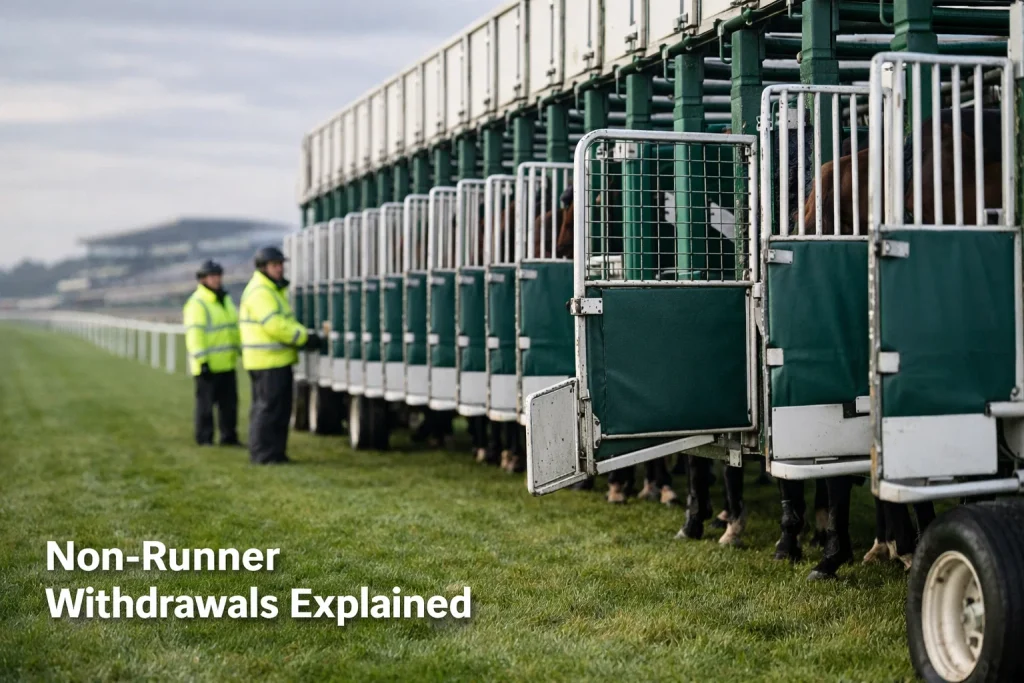
Non-runners disrupt carefully planned bets and alter race dynamics in ways that demand understanding. When horses don't run, the consequences ripple through betting markets, affecting not just those who backed the withdrawn horse but everyone with a stake in the race. Knowing why horses become non-runners—and what happens when they do—protects punters from confusion and helps them adapt quickly.
British racing's 13,556 horses in training face countless variables between declaration and race time. Going changes, minor injuries, travel problems, and trainer decisions all contribute to non-runner announcements. With over 70% of betting now conducted via mobile devices, punters need instant access to withdrawal information to manage their positions effectively.
Understanding when horses don't run matters because non-runners change everything. Field sizes shrink, market dynamics shift, and betting rules apply deductions or void stakes depending on circumstances. Punters who grasp these mechanics navigate non-runners confidently rather than discovering unwelcome surprises when checking results.
Why Horses Become Non-Runners and Rule 4 Deductions
Going changes represent the most common non-runner trigger. Trainers declare horses days before racing when ground conditions remain uncertain. If rain transforms good ground to soft—or drought hardens expected yielding terrain—horses unsuited to the changed conditions get withdrawn. Connections prefer losing the entry fee to risking poor performances or injury on inappropriate going.
Minor health issues prompt precautionary withdrawals. A horse showing slight lameness in morning exercise, running a temperature, or displaying any sign that something isn't quite right gets pulled from the race. Trainers operate on the principle that tomorrow matters more than today—running a slightly compromised horse risks turning minor problems into serious setbacks.
Travel difficulties occasionally prevent horses reaching the course. Lorry breakdowns, traffic delays, and logistical complications mean some declared runners never arrive. These situations create late non-runners when punters have already committed their stakes, triggering rule adjustments that protect betting market integrity.
Tactical withdrawals happen when conditions evolve unfavourably. A trainer might withdraw a horse after seeing the opposition, deciding the race no longer represents a suitable opportunity. These strategic non-runners frustrate punters who backed the horse precisely because of the declared field, but trainers prioritise their horses' careers over betting considerations.
Behavioural issues at the start can transform runners into non-runners after betting closes. Horses who refuse to load, become unruly in the stalls, or prove too fractious to race safely get withdrawn by the starter. These at-the-post non-runners receive specific betting treatment distinct from earlier withdrawals.
Rule 4 Deductions Explained
Rule 4 protects bookmakers and the betting industry when non-runners distort markets. Named after Tattersalls' Committee Rule 4, this mechanism applies deductions to winning bets when a horse withdraws after betting opens. The deduction reflects how much the non-runner's absence improves remaining horses' chances.
Deduction scales relate to the withdrawn horse's price. A short-priced favourite withdrawal triggers larger deductions—up to 90 pence in the pound for horses priced 1/9 or shorter. Longer-priced withdrawals create smaller deductions, as their absence affects remaining horses less dramatically. A 14/1 shot withdrawal might trigger only 5 pence deduction.
The specific deduction scale runs: 1/9 or shorter = 90p; 2/11 to 2/17 = 85p; 1/4 to 2/9 = 80p; 3/10 to 2/7 = 75p; 1/3 to 4/11 = 70p; 2/5 to 4/9 = 65p; 1/2 to 4/7 = 60p; 8/13 to 4/6 = 55p; 8/11 to 4/5 = 50p; 5/6 to 20/21 = 45p; Evens to 6/5 = 40p; 5/4 to 6/4 = 35p; 13/8 to 7/4 = 30p; 15/8 to 9/4 = 25p; 5/2 to 3/1 = 20p; 10/3 to 4/1 = 15p; 9/2 to 11/2 = 10p; 6/1 to 9/1 = 5p; over 9/1 = no deduction.
Multiple non-runners compound deductions. If two horses withdraw, their individual deductions combine—though the maximum total deduction caps at 90 pence in the pound. Punters winning on remaining runners receive their odds minus the applicable deductions, calculated on potential winnings rather than stake.
Understanding deductions prevents unpleasant surprises when collecting winnings. A successful bet at 4/1 following a favourite's withdrawal might return significantly less than expected after rule 4 reductions apply. Checking non-runner announcements before betting allows punters to factor potential deductions into value assessments.
What Happens to Your Bet
Bets on withdrawn horses become void, with stakes returned in full. This straightforward refund applies to single bets—the punter gets their money back and moves on. The non-runner simply didn't race, so no bet applies.
Multiple bets handle non-runners differently. In accumulators and combination bets, the non-runner gets removed and the bet continues with remaining selections at reduced odds. A four-horse accumulator becomes a treble; a treble becomes a double. The bet remains live but with altered structure and returns.
Each-way bets on non-runners void completely—both win and place portions return to the punter. However, each-way bets on horses that ran but lost only the win portion remain live for place returns if applicable, with rule 4 deductions applied to any place winnings.
Ante-post bets follow different rules. Stakes placed on horses before final declarations often carry no non-runner refund—the risk of withdrawal forms part of the ante-post value proposition. Punters accepting longer odds well in advance take the chance that their selection might not ultimately run. Some bookmakers offer non-runner insurance on major ante-post events.
Best odds guaranteed promotions typically don't apply after non-runner deductions. The guarantee covers SP exceeding the taken price, not protection against rule 4 reductions. This distinction matters when favourite withdrawals trigger significant deductions on otherwise profitable bets.
Checking Declared Runners
Confirming runners before betting prevents backing non-starters. Racing administration requires declarations by specific deadlines—typically 48 hours before flat racing, longer for some jump meetings. However, withdrawals can occur right up to race time, making final confirmation essential.
Official sources provide authoritative runner information. The BHA website publishes declared runners following declaration deadlines. Racing Post and other major platforms update continuously as withdrawals occur. Course-specific information becomes available on race day through track announcements and displays.
Mobile betting apps generally show current runner status, though update timing varies between platforms. Serious punters cross-reference multiple sources before committing significant stakes, particularly on competitive handicaps where non-runners significantly affect market dynamics.
Weather monitoring helps anticipate going-related withdrawals. When forecasts predict significant rain or unexpected dry spells, horses with strong going preferences become withdrawal candidates. Punters can avoid backing likely non-runners by assessing going forecasts against known horse preferences.
Late Withdrawals at the Course
At-the-course withdrawals occur after horses arrive at the racecourse. Veterinary inspections may reveal issues not apparent at home. Horses may prove unfit after travelling. The starter may refuse to load dangerous animals. These late withdrawals trigger specific betting responses.
Horses withdrawn at the start—refusing to enter stalls or being deemed unfit to race—create the shortest-notice non-runners. Betting shops and online platforms must process these withdrawals instantly, applying appropriate deductions to markets that closed just minutes earlier.
The announcement protocol ensures all betting operators receive non-runner information simultaneously. Official notifications prevent some bookmakers gaining timing advantages over others. This synchronisation protects market integrity, though practical delays mean announcements reach different platforms at slightly different times.
Punters at the course see non-runners announced on big screens and through public address systems. This information reaches track punters before broadcast audiences, creating brief windows where course bookmakers adjust their boards before off-course prices reflect the withdrawal. Sharp punters exploit these moments when possible.
Late withdrawals frustrate punters most when backing strongly fancied horses who prove unfit on the day. The stake returns, but opportunity costs—missing the race, missing better alternatives—create genuine disappointment. Understanding that late withdrawals represent racing reality rather than conspiracy helps maintain perspective when they occur.
