
Hurdle Racing Results UK: Speed Over Timber
 Available in US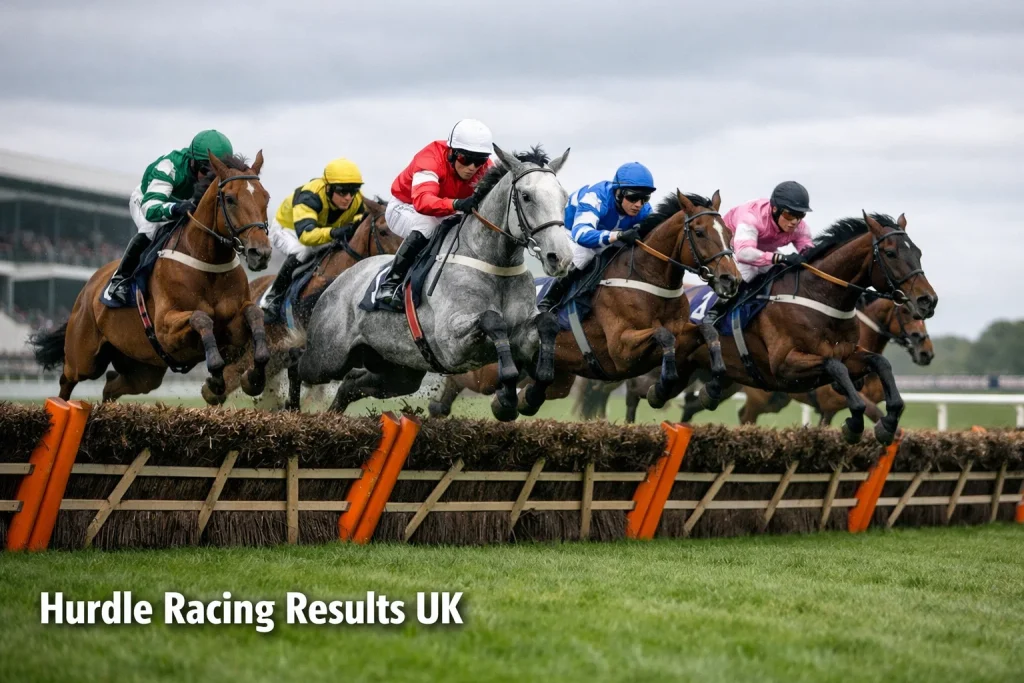
Hurdle racing results reveal jump racing's speediest division, where horses clear smaller obstacles while maintaining pace that approaches flat racing intensity. Results from hurdle races suit horses who combine speed with jumping fluency—the ability to pop over flights without breaking stride that separates champions from also-rans. Speed over timber demands athleticism that results quickly identify.
British jump racing recorded 16,114 jump runs in the first half of 2024, with hurdle races representing a significant portion of this activity. The 1,840,245 spectators attending jump racing fixtures witness hurdle contests that provide accessible introduction to National Hunt racing alongside the championship events that crown divisional champions.
Hurdle racing serves multiple purposes within jump racing's ecosystem. Results from hurdle races introduce horses to obstacles before progression to chasing. They provide homes for speed-oriented jumpers unsuited to larger fences. They crown champions in their own right through races like the Champion Hurdle. Results from hurdles matter whether horses are passing through or staying permanently.
Types of Hurdle Races
Novice hurdles accept horses who've won no more than one hurdle race before the current season. Results from these events reveal how horses handle jump racing after arriving from flat racing or point-to-pointing. The learning curve appears in results showing development through the novice ranks.
Maiden hurdles provide first-win opportunities for horses who've run over hurdles without success. Results from maiden hurdles show persistence rewarded—horses breaking through after placed efforts, or remaining stuck unable to win at any level.
Handicap hurdles attract exposed horses competing on official ratings. Results from these events test horses against weight-adjusted competition, producing the close finishes that handicaps generate across both codes.
Conditions hurdles bring together horses meeting specific criteria without handicap weight adjustments. Results from conditions events at higher levels—Grade 3 through Grade 1—identify genuine class rather than handicap exploitation.
Juvenile hurdles restrict entry to four-year-olds, creating age-group competition that develops horses who may later contest open events. Results from juvenile races reveal the flat-form horses who handle obstacles successfully.
Juvenile Hurdles: From Flat Racing
Juvenile hurdlers transfer from flat racing, bringing form achieved on the level into National Hunt competition. Results from their hurdle debuts reveal whether flat ability translates across codes—some horses take immediately to jumping while others struggle despite quality flat credentials.
The Triumph Hurdle at Cheltenham crowns the season's champion juvenile. Results from this Grade 1 identify four-year-olds whose combination of flat speed and jumping aptitude produces excellence at the Festival's highest level.
Flat form provides baseline ability assessment for juveniles. Results showing horses with strong flat ratings succeeding over hurdles confirm that class transfers between codes; failures suggest obstacles expose limitations that flat racing obscured.
Physical development affects juvenile hurdle results significantly. Four-year-olds mature at different rates; results may reflect current development rather than ultimate potential. Tracking physical progression alongside results improves understanding of juvenile profiles.
French juveniles particularly impact British juvenile hurdle results. Results from AQPS horses trained in France often feature prominently in British juvenile events, making continental form relevant for assessing British races.
Novice Hurdle Development
Novice hurdle results track horses in their first season over flights. The Supreme Novices' Hurdle at Cheltenham represents the championship target, with results from this Grade 1 identifying the season's best first-year hurdler.
Development through the novice ranks shows in improving results. Horses progressing from ordinary novice victories toward graded success demonstrate the trajectory that championship contenders follow. Plateauing results suggest horses reaching their levels.
Jumping fluency distinguishes top novices. Results noting horses gaining ground at flights, meeting hurdles perfectly, or jumping with economy reveal natural ability that pays dividends in tougher company.
The Ballymore Novices' Hurdle tests staying novice hurdlers over two and a half miles at Cheltenham. Results from this championship identify stamina-oriented novices whose futures may lie over staying trips or over fences rather than at two miles.
Novice hurdle form often predicts chasing ability. Results showing horses jumping hurdles impressively suggest they'll handle fences; sloppy hurdle jumping warns of potential chasing difficulties. The novice hurdle season previews subsequent chasing careers.
Championship Hurdle Racing
The Champion Hurdle at Cheltenham represents hurdling's pinnacle—the two-mile championship that identifies the sport's fastest obstacle racer. Results from this Grade 1 determine which horse rules the division, with champions sometimes dominating for multiple seasons.
Open hurdles throughout the season provide Champion Hurdle trials. Results from races like the Fighting Fifth at Newcastle, the Christmas Hurdle at Kempton, and the Irish Champion Hurdle establish pecking orders that inform Festival markets.
Staying hurdles contest the three-mile Stayers' Hurdle at Cheltenham. Results from this championship identify horses whose stamina exceeds typical hurdler profiles, producing different champions from those who contest the Champion Hurdle.
The dual-purpose discussion surrounds horses who contest both flat and hurdle racing. Results showing horses successful across codes demonstrate versatility, though the physical demands of combining summer flat racing with winter hurdling limit dual-purpose careers.
Key Hurdle Races to Follow
The Fighting Fifth Hurdle at Newcastle opens the championship season in late November. Results from this Grade 1 provide first impressions of champion contenders returning from summer breaks, establishing early-season form benchmarks.
The Christmas Hurdle at Kempton on Boxing Day features established hurdlers in competitive action. Results from this Grade 1 update assessments formed earlier in the season, often clarifying the Champion Hurdle picture.
Trials across Britain and Ireland produce results that preview Cheltenham form. As Royal Veterinary College research into equine welfare has demonstrated, British racing maintains high standards across all levels—these standards apply to trial races whose results inform Festival analysis.
Cheltenham's January and November meetings stage important hurdle trials. Results from the International Hurdle and similar events identify horses in form and ready for championship targets, while exposing those whose results suggest struggle ahead.
Hurdle racing results matter whether horses are championship contenders, handicap specialists, or developing types passing through toward chasing careers. Speed over timber tests abilities that results reveal clearly to those who know how to read them.
The hurdle division attracts different horse types than chasing. Smaller, speedier horses often excel over flights where they'd struggle over larger obstacles. Results from hurdling identify these types whose careers may remain permanently over the smaller obstacles rather than progressing to fences.
Ground preferences significantly affect hurdle results. Some horses need quick ground to show their speed; others handle soft conditions that slow pace and demand stamina. Results across different going reveal preferences that inform betting when conditions favour or oppose individual runners.
Trip requirements emerge through hurdle results. Two-mile specialists rarely succeed when stretched beyond their distance; horses whose results improve over further trips suggest staying potential for longer events. Distance analysis from hurdle results informs both hurdle and subsequent chase assessment.
Hurdle racing's position within National Hunt racing connects it to both flat racing and chasing. Results from hurdle races reflect this bridging role—showing speed that derives from flat racing while testing jumping ability that previews chasing potential. Understanding hurdle results means appreciating this transitional function.
Speed over timber accurately describes hurdling's essential character. Results from hurdle races identify horses who combine pace with obstacle clearance, separating those suited to the discipline from those who merely pass through it toward different targets.
The hurdle season builds toward Cheltenham's championship hurdles in March. Results from throughout the campaign inform Festival markets where substantial betting interest concentrates on Champion Hurdle, Stayers' Hurdle, and supporting hurdle events. Following hurdle results systematically provides the foundation for Festival analysis.
