
Horse Welfare in UK Racing: How Horses Come First
 Available in US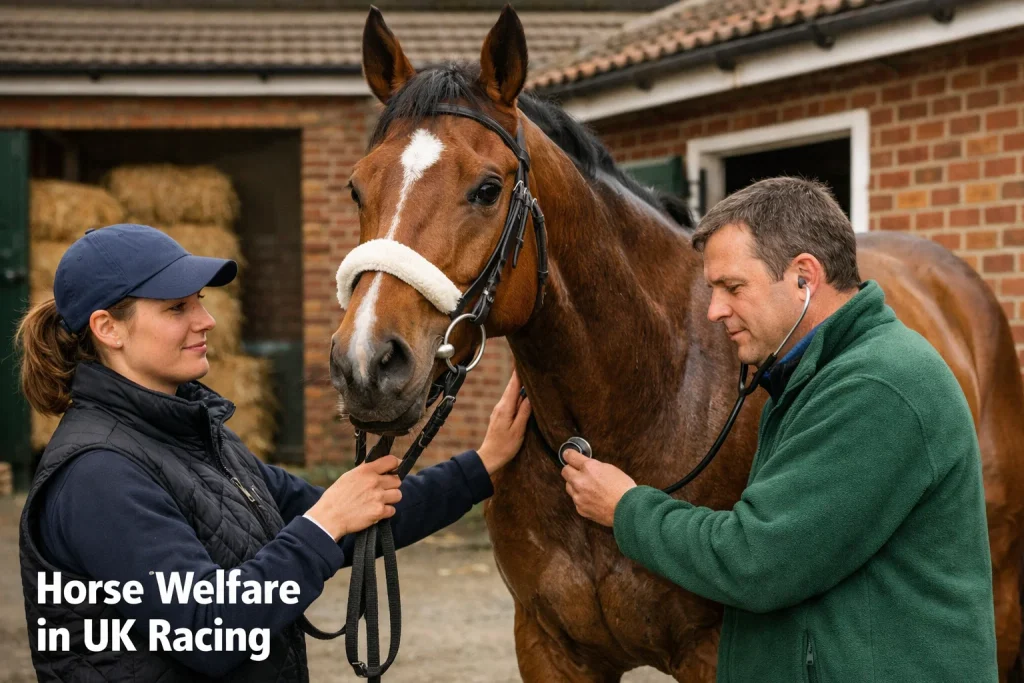
Horse welfare underpins every aspect of British racing, from results analysis to industry economics. Understanding welfare standards provides context for interpreting racing outcomes—results occur within a framework designed to prioritise equine safety and post-racing life. Horses come first in British racing, a principle reflected in extensive investment, transparent reporting, and continuous improvement efforts.
The fatality rate across British racing stands at 0.22%—meaning 99.78% of runners complete their races safely. While any equine death remains regrettable, this statistic reflects decades of safety improvements that have progressively reduced risks. Over 80% of British thoroughbreds remain traceable and active after their racing careers, demonstrating industry commitment to lifetime welfare.
Welfare considerations affect how punters should interpret results. Horses withdrawn for safety reasons, races modified for welfare purposes, and transparency about outcomes all reflect an industry that prioritises horses over commercial pressures. Understanding this context enriches engagement with racing results.
Safety Statistics and Trends
Jump racing's fatality rate of 0.47% exceeds flat racing's 0.10%, reflecting the additional risks of racing over obstacles. These figures inform discussions about acceptable risk while demonstrating that the vast majority of jump racing occurs safely. Results from jump racing emerge within this risk context.
Historical comparison shows significant safety improvements over decades. Fatality rates have declined substantially through fence modifications, course improvements, veterinary advances, and regulatory changes. Current statistics represent the safest era in racing history, though work continues.
Specific obstacle modifications at courses like Aintree have reduced fatality rates at historically challenging fences. Results from races over modified obstacles show fewer incidents without diminishing competitive quality, demonstrating that safety improvements need not compromise racing integrity.
Weather-related abandonments protect horses from unsuitable conditions. Results don't occur when course officials determine that conditions pose unacceptable risks. This willingness to abandon meetings demonstrates welfare prioritisation over commercial considerations.
Veterinary oversight at every meeting ensures horses are fit to race. Pre-race inspections identify horses whose condition warrants withdrawal; post-race examinations confirm welfare outcomes. This infrastructure supports results that emerge from properly supervised competition.
BHA Welfare Regulations
The BHA enforces comprehensive regulations covering every aspect of horse welfare. Training yard inspections, transport requirements, and racecourse standards all operate under regulatory frameworks designed to protect horses. Results occur within this regulated environment.
Equipment regulations restrict what horses can carry and how they can be handled. Whip rules limit use and specify permitted equipment; headgear restrictions prevent potentially harmful devices. These regulations shape results by defining acceptable competition methods.
Veterinary requirements mandate specific standards for horse care. Trainers must provide adequate veterinary attention; racecourse veterinary teams must meet defined standards. The infrastructure supporting results includes substantial veterinary investment.
Reporting requirements ensure transparency about welfare outcomes. Incidents must be reported and investigated; findings inform regulatory improvements. This accountability structure supports continuous welfare enhancement.
Penalties for welfare breaches can be severe. Trainers who fail to maintain adequate standards face sanctions including licence suspension. This enforcement ensures regulations achieve practical effect rather than remaining theoretical requirements.
Aftercare and Retraining
Retraining of Racehorses (RoR) manages the charitable organisation dedicated to former racehorses' welfare. Funded by racing industry contributions, RoR supports retraining, rehoming, and welfare for horses whose racing careers have ended.
Second careers for racehorses include show jumping, eventing, polo, riding school work, and companion roles. Results from racing represent just one chapter in horses' lives; many continue active careers in different disciplines.
The traceability initiative tracks horses after racing. Over 80% of British thoroughbreds remain identifiable and accounted for throughout their lives. This monitoring ensures welfare obligations extend beyond racing careers.
Sanctuaries provide lifetime care for horses who cannot be rehomed. Industry funding supports these facilities, ensuring horses whose circumstances prevent placement still receive appropriate care.
Owner and trainer education promotes responsible attitudes toward horses' entire lives. The industry encourages viewing racing ownership as custodianship rather than mere sporting investment, with obligations extending beyond competitive careers.
Industry Investment in Welfare
British racing has invested £56 million in equine health and veterinary research since 2000. This funding supports scientific advances that improve understanding of horse health, injury prevention, and treatment—investments that enhance welfare across the industry.
Prize money structures include welfare levies that fund dedicated programmes. A portion of betting turnover flows to welfare initiatives through the levy system, creating sustainable funding that connects commercial success with welfare investment.
Racecourse improvements continuously enhance safety standards. Surface maintenance, fence construction, and facility upgrades all receive ongoing investment. The physical infrastructure supporting results improves year over year.
Research partnerships with veterinary institutions advance scientific understanding. Collaborations with the Royal Veterinary College and other research bodies produce findings that inform practical welfare improvements across the sport.
Jockey welfare receives parallel attention alongside horse welfare. Improved safety equipment, medical facilities at courses, and injury protocols protect both horses and riders. The integrated approach recognises that welfare concerns extend to all racing participants.
Transparency Through HorsePWR
HorsePWR provides public access to welfare data that racing historically kept internal. This transparency platform publishes fatality rates, aftercare statistics, and welfare metrics that allow anyone to examine racing's welfare record.
The transparency initiative reflects modern expectations for accountability. Results occur in public view; welfare outcomes should be equally visible. HorsePWR delivers this visibility through accessible online presentation.
Data publication enables informed discussion about racing welfare. Critics and supporters alike can examine identical statistics, creating factual foundations for debates that previously relied on partial information.
Continuous updating ensures HorsePWR reflects current reality rather than outdated snapshots. Welfare statistics update as incidents occur, maintaining relevance that static reports cannot achieve.
International comparison becomes possible through standardised reporting. British racing's welfare statistics can be assessed against other jurisdictions, revealing relative performance and highlighting areas for improvement.
Public engagement through welfare transparency builds trust in racing. Audiences who can verify welfare claims independently develop more informed relationships with the sport than those relying solely on industry assertions.
The commitment to transparency demonstrates confidence in welfare standards. Publishing data invites scrutiny that industries with poor records would avoid. British racing's willingness to share statistics reflects genuine belief in its welfare performance.
Educational resources accompany raw data on welfare platforms. Context explaining what statistics mean, how they compare historically, and what industry responses entail helps audiences interpret information meaningfully.
Stakeholder feedback through transparency platforms informs ongoing improvements. Public observation sometimes identifies issues that internal review missed. External perspectives enhance welfare development through constructive engagement.
Horse welfare shapes every aspect of British racing, from regulation to results. Understanding this context enriches engagement with the sport, demonstrating that results emerge from a system designed to ensure horses come first in every decision that affects their wellbeing.
The welfare framework continues evolving as understanding advances and expectations change. What represented adequate welfare standards decades ago may fall short of current requirements. This continuous improvement reflects genuine commitment rather than static compliance.
Public awareness of welfare issues has grown alongside transparency initiatives. Modern racing audiences understand more about horse welfare than previous generations, enabling informed engagement with results that includes appreciation for the protective context within which racing occurs.
Industry critics sometimes overlook genuine welfare achievements while focusing on remaining challenges. Balanced assessment acknowledges both the significant progress made and the ongoing work required. Results emerge from an imperfect but improving system that takes welfare seriously.
Welfare considerations ultimately serve racing's long-term interests alongside ethical obligations. A sport that demonstrably protects its participants maintains social licence to operate. Horses coming first represents both moral imperative and strategic necessity for British racing's continued vitality.
