
Going in Horse Racing Explained: Ground Conditions Guide
 Available in US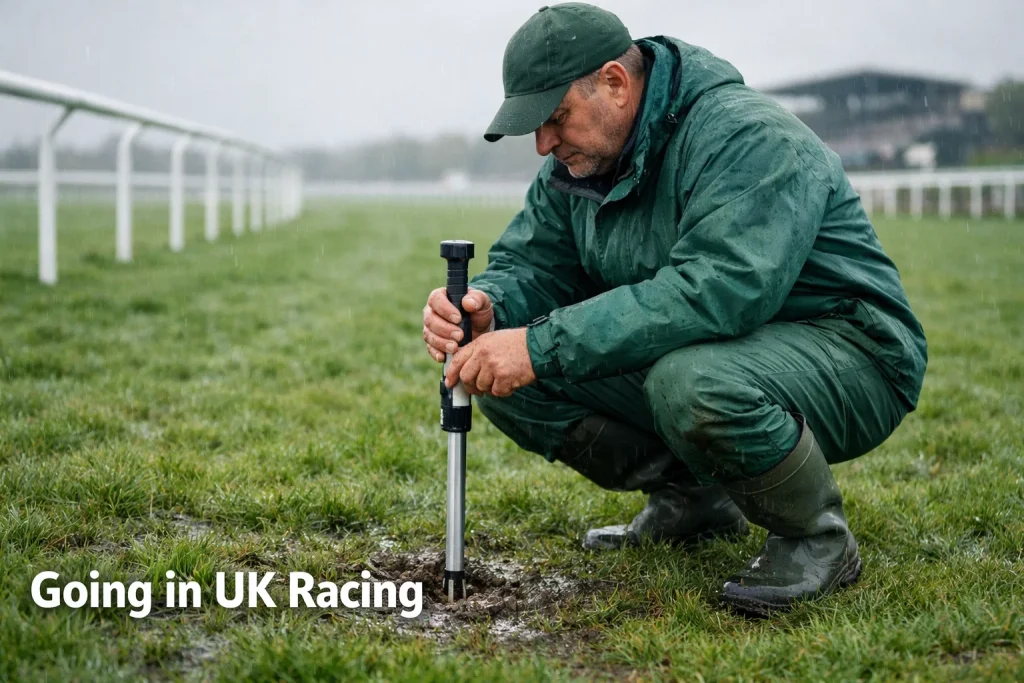
Going descriptions in horse racing results reveal ground conditions that fundamentally affect performance. A horse who excels on firm ground may struggle when rain softens the track; a soft-ground specialist might flounder on quick terrain. Understanding what going means in results unlocks form analysis that accounts for conditions—ground matters more than many punters realise.
British racing navigates highly variable weather across its 1,410 annual fixtures, creating diverse ground conditions that results must record. From summer firm through winter heavy, the going spectrum encompasses terrain that might as well be different sports. Horses averaging 3.38 runs per year on flat alone encounter various conditions, building preferences that form analysts must identify and respect.
The going description accompanies every result, providing essential context for interpreting performance. Ignoring going when analysing form means comparing incomparable data—like assessing tennis players without noting whether they played on grass or clay.
Ground conditions play a massive role during the winter months, especially when analyzing the latest National Hunt jump racing results.
The Official UK Going Scale: From Hard Ground to Heavy
The official going scale runs through defined categories with intermediate descriptions capturing conditions between benchmarks. Hard ground represents the firmest end—baked earth that jars horses' legs and favours light-actioned runners. This extreme rarely appears in results, as courses generally avoid racing on dangerously firm terrain.
Firm describes quick ground with minimal give, typically appearing after extended dry spells. Results on firm ground often feature fast times as horses cover ground efficiently without battling soft terrain. Some horses show particular aptitude for these conditions, delivering their best performances when the ground rides quick.
Good ground represents the racing ideal—consistent terrain that neither favours nor disadvantages particular running styles. Results on good going provide the fairest test of ability, which is why racecourses aim to maintain such conditions when weather permits. The benchmark against which other going is measured.
Good to soft and soft describe increasingly testing conditions where horses must work harder through the ground. Results on these descriptions favour horses with stamina and the physical capacity to handle demands that lighter-actioned types cannot sustain. Jump racing often occurs on soft ground, particularly during winter.
Heavy represents the most testing extreme—waterlogged ground that saps energy with every stride. Results on heavy going see dramatic time increases and large winning margins as horses tire at different rates. Only certain types thrive in these conditions, making heavy-ground form highly specific and valuable for future reference.
Intermediate descriptions like good to firm and good to soft capture conditions between benchmarks. These hybrid classifications appear frequently in results, acknowledging that conditions rarely fall precisely on official markers. Reading these descriptions contextually—noting whether conditions seem closer to one end than the other—improves form interpretation.
Turf Going Through the Seasons
Spring brings transitional going as winter rain subsides and new grass growth strengthens turf. Results in March and April often show good to soft conditions, occasionally drying toward good as the season progresses. The Cheltenham Festival typically encounters soft ground, making winter form over similar conditions particularly relevant.
Summer represents the fastest period on turf. Extended daylight, reduced rainfall, and mature grass combine to produce good to firm or firm conditions. Results from Royal Ascot and other premier summer meetings reflect quick ground that suits horses with tactical speed rather than grinding stamina.
Autumn sees conditions deteriorate as rainfall increases and daylight shortens. Results from October onwards show good to soft becoming soft as winter approaches. This transitional period catches some horses unprepared—those trained for summer campaigns may struggle as ground softens beyond their preferred range.
Winter on turf brings the most testing conditions. Results from National Hunt racing frequently show soft or heavy going that transforms the nature of competition. Horses need stamina and the physical constitution to handle demanding terrain over extended distances. Winter form over appropriate going carries significant weight.
All-Weather Going Descriptions
All-weather surfaces use a simplified going scale reflecting their more consistent nature. Standard describes normal conditions where the surface rides as intended. Most all-weather results record standard going, as synthetic surfaces resist weather extremes that transform turf conditions.
Slow appears in results when all-weather surfaces ride deeper than normal, perhaps after maintenance or during certain weather conditions. Times increase and racing characteristics shift slightly toward stamina. However, the variation is far less dramatic than the firm-to-heavy range on turf.
Fast occasionally describes all-weather going when surfaces compact or conditions dry beyond normal parameters. Results on fast going show quicker times and may favour different running styles than standard conditions. This description appears rarely compared to the standard classification.
The consistency of all-weather going represents its primary advantage. Results from Kempton, Wolverhampton, Lingfield, and other synthetic tracks provide form that translates reliably to future runs on the same surface type. This predictability makes all-weather specialists easier to identify than turf horses whose form fluctuates with conditions.
Weather's Impact on Going
Rain transforms going descriptions over short periods. A course announced as good to firm in the morning may race on soft ground after afternoon showers. Results include the official going description at race time, but punters monitoring weather throughout the day gain insight into evolving conditions.
Frost creates abandoned fixtures rather than modified going. When ground freezes, racing cannot proceed safely regardless of underlying conditions. Results from fixtures that survive frost watches may show ground riding faster than expected as moisture freezes rather than softening the surface.
Drought produces extreme firm conditions that courses try to mitigate through watering. Results on watered tracks may show good going despite minimal recent rainfall. Knowing whether a course has watered—information sometimes available through official updates—helps interpret what the going description really means.
Wind dries surfaces quickly between showers, meaning going can improve even during unsettled weather. Results from tracks exposed to wind may show quicker going than geographical neighbours in sheltered locations. Microclimate effects make track-specific knowledge valuable for going assessment.
Form Analysis by Going Preference
Identifying going preferences requires examining results across different conditions. Horses who consistently perform better on soft than firm—or vice versa—reveal preferences that inform betting decisions. Results patterns emerge over several runs, though dramatic form reversals on changed going sometimes appear immediately.
Pedigree influences going preferences, though not deterministically. Certain sire lines produce offspring who handle soft ground more readily; others breed speed horses who excel on quick terrain. Results showing a horse struggling on soft when its siblings thrive there suggest individual variation worth noting for future reference.
Physical conformation affects going aptitude. Horses with pronounced knee action often handle soft ground well, their high-stepping stride coping with demanding terrain. Low-actioned horses who skim the surface may struggle when ground becomes testing. Results reveal these physical characteristics through performance patterns.
Results from a horse's early career establish baseline going preferences that typically persist. First-time-out runs on particular going carry significance—horses who debut on soft ground and win may always prefer those conditions. Tracking going from first run onwards builds a profile that remains relevant throughout a career.
Class intersects with going preferences in complex ways. Some horses handle soft ground at lower levels but fail when facing quality opposition on testing terrain. Results showing horses winning on soft in handicaps but failing in conditions races suggest they lack the class to overcome demanding conditions against superior rivals.
Going preferences should influence race selection, not just betting choices. Trainers who consistently run horses on unsuitable going either know something the results don't show or are making errors worth opposing. When a known soft-ground horse appears declared for a meeting expecting firm ground, the question becomes whether conditions will change—or whether to oppose the selection regardless of other merits.
Monitoring going updates before committing to bets makes sense given how dramatically conditions affect results. Courses issue going reports throughout race days, and late changes can transform prospects. Horses whose form reads well on anticipated good ground may face very different circumstances if rain arrives—results then reflect conditions rather than inherent ability.
Stay ahead of the bookmakers by tracking how the going affects the live UK horse racing results throughout the afternoon.
