
Aintree Racing Results Today: Jump Racing Updates
 Available in US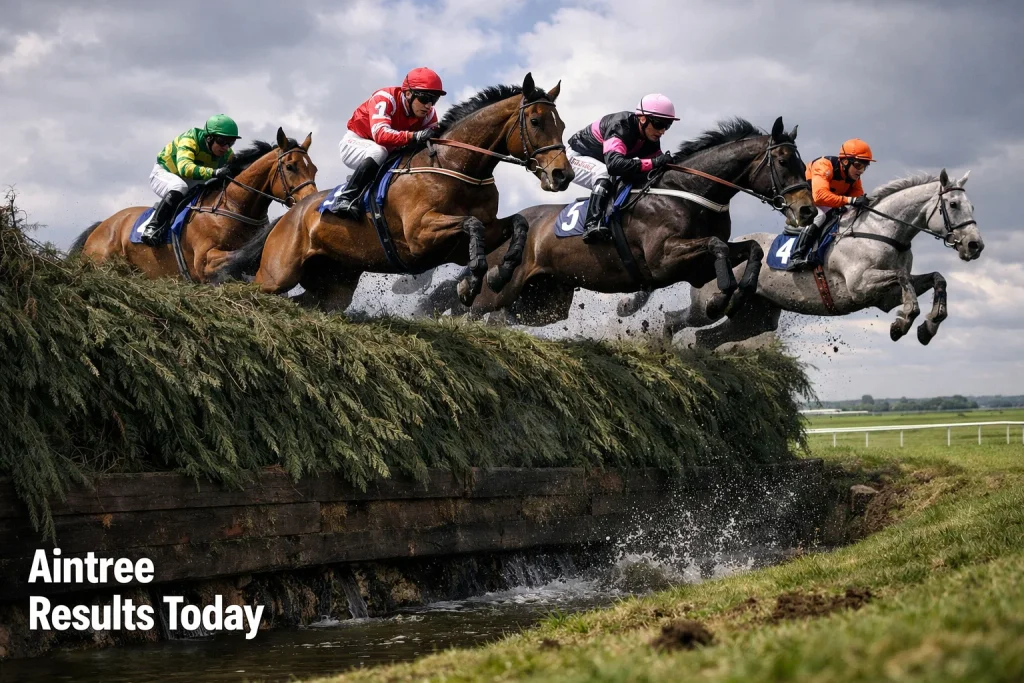
Aintree racing results reach beyond the racing world into national consciousness. The Grand National, run over four miles and two furlongs across thirty of the most famous fences in sport, captures attention from millions who bet on no other race all year. Results from this Liverpool course carry drama and significance that no other track can match—Aintree is where legends are made.
Jump racing accounts for approximately 35% of all British races, and the discipline finds its most spectacular expression at Aintree. With 3,482 horses currently in jump training—a figure that has grown 14.6% since 2019 according to the BHA Horse Population Report—competition for places in the National itself intensifies each season. Results from Aintree's three-day April Festival determine who earns the right to tackle those famous spruce fences in the world's most watched horse race.
Beyond the National spectacle, Aintree stages high-quality jump racing that produces significant form. The course's unique challenges sort horses on jumping ability, stamina, and courage in ways that more conventional tracks cannot replicate.
Aintree Racing Results and Grand National Steeplechase Form
The Grand National represents jump racing at its most demanding. Forty runners set off across terrain that includes the most famous obstacles in the sport. Results from the National resonate through racing history—names like Red Rum, Aldaniti, and Tiger Roll have transcended sport to become part of British cultural memory.
The race's unique character makes form analysis challenging but not impossible. Results from previous Nationals reveal patterns worth studying: horses need stamina beyond the ordinary, jumping ability that holds up under pressure, and the mental resilience to cope with the unique atmosphere of National day. Previous course form matters, but so does the ability to handle big-field scrambles without losing position or confidence.
Modern safety developments have modified the National's character without eliminating its essential challenge. The fences have been made safer, starting positions adjusted, and field sizes managed, but results still reward the genuine stayer who jumps efficiently and stays brave when fatigue sets in. The race's dropout rate—horses who fail to complete—has reduced significantly, but finishing the course still represents an achievement.
Betting on the National differs from betting on other races. The enormous public interest creates market distortions; heavily backed public fancies sometimes drift in real terms as shrewd money identifies overlooked contenders. Results frequently produce surprise winners at substantial odds, reflecting the inherent unpredictability of forty horses tackling thirty fences over more than four miles.
For serious punters, National results provide information about which horses truly stay and which ones merely get the trip. A horse who wins or places in the National has proven stamina credentials that remain relevant whenever that horse reappears at marathon distances.
The Famous Fences: Becher's, Canal Turn, The Chair
The National fences define Aintree's character. Becher's Brook, encountered twice during the race, features a significant drop on the landing side that catches out horses who jump too flat or land unbalanced. Results at Becher's often prove decisive—horses who negotiate this fence well typically figure in the finish, while those who struggle may find their race effectively over.
The Canal Turn requires horses to jump at an angle, landing and turning sharply left. This obstacle demands athleticism and awareness; horses who approach carelessly risk running out or losing momentum that takes time to recover. Results show that jockeys who know the track position their horses precisely for this fence, gaining crucial lengths on rivals who get it wrong.
The Chair, the largest fence on the course, comes just before the run past the stands on the first circuit. Results here reflect jumping bravery—horses who hesitate or get in close struggle with the fence's height and spread. Those who meet it right and pop over it gain confidence for the remaining obstacles.
Valentine's Brook, with its water-filled ditch, sorts horses on scope and precision. The fence demands accurate measurement of take-off point; horses who get too close find themselves scrambling. Results frequently show form reversals at Valentine's, where a horse's jumping technique proves as important as raw ability.
Understanding how these fences influence results helps interpret both National and Mildmay course form. Horses who handle Aintree's unique obstacles possess skills that may not show in conventional racing elsewhere.
The Mildmay Course: Regular Racing
The Mildmay Course provides Aintree racing throughout the jump season without the extreme demands of the National fences. This more conventional track runs inside the Grand National course and stages fixtures from October through April. Results from the Mildmay contribute to form analysis across British jump racing—the track asks proper questions without the unique variables that complicate National form.
The fences on the Mildmay Course are built to standard specifications, testing jumping ability fairly. Horses who win here have demonstrated competence over obstacles at racing pace, information that proves useful when assessing their chances elsewhere. Results from Mildmay fixtures often frank strongly at Cheltenham and other championship tracks.
The course configuration suits galloping types who jump efficiently and stay strongly. The left-handed layout with long straights rewards horses who can sustain their gallop rather than those who rely on sharp acceleration. Results tend to favour front-runners and prominent racers over hold-up horses who need tracks with shorter straights.
Ground conditions at Aintree vary through the season. Autumn racing tends toward the quicker side before winter rainfall softens the going. Results on different ground types reveal which horses act on testing conditions—valuable information when the same horses reappear at Cheltenham in March, where soft ground is the norm.
Festival Guide: April at Aintree
The Aintree Festival spans three days in early April, building toward National day on Saturday. The meeting features Grade 1 contests on each of the opening days that generate significant form independent of the big race itself. Results from these championship events identify the best chasers and hurdlers in training.
The Aintree Hurdle on Thursday brings together leading two-mile hurdlers, often providing a rematch of Champion Hurdle form from Cheltenham three weeks earlier. Results from this contest confirm or challenge the pecking order established at headquarters, and horses who reverse form deserve attention for future engagements.
The Melling Chase on Friday tests top-class chasers over two and a half miles on the Mildmay Course. Results here inform thinking about which horses stay well and which ones benefit from the shorter trip. The race has produced notable winners who went on to excel at various distances.
Grand National day itself features supporting races that attract quality fields. The Sefton Novices' Hurdle and Maghull Novices' Chase identify future stars, while the Red Rum Handicap Chase provides a competitive betting heat. Results from across the day contribute to form analysis that extends well beyond April.
The Festival atmosphere intensifies toward National day. Crowds build, betting volumes peak, and results receive scrutiny from audiences far larger than jump racing normally attracts. This spotlight means that Aintree Festival form enters public consciousness in ways that form from other meetings does not.
Results Through History
Aintree's results archive stretches back to 1839, when Lottery won the first officially recognised Grand National. The historical record provides context for modern racing—patterns emerge across decades that help interpret current form. Horses who conform to the profile of previous winners deserve respect; those who diverge from established patterns face the accumulated wisdom of nearly two centuries of results.
Age profiles matter in National results. The race has traditionally favoured horses between eight and eleven years old, mature enough to have developed the stamina and experience required, but not so old that their physical powers have declined. Results show that younger horses can win but need exceptional quality; older horses occasionally defy age but rarely.
Weight carries significance in National results. The burden of twelve stone or more has proved decisive in past runnings; horses attempting to carry top weight against improving handicappers face arithmetic that rarely resolves in their favour. Results show that winners typically carry weights in the lower half of the handicap.
Previous Aintree form, whether over the National fences or the Mildmay Course, correlates with Grand National success. Results indicate that horses who have proven they handle the unique challenges of this Liverpool track deserve upgrading when they return. Course form here matters more than at most other venues.
The historical record is accessible through official archives and racing databases. Punters researching National contenders can study how past results might inform future ones, identifying patterns that persist across generations of horses and riders. Aintree's history provides lessons for those willing to study it.
