
Saturday Racing Results: The Weekend's Main Events
 Available in US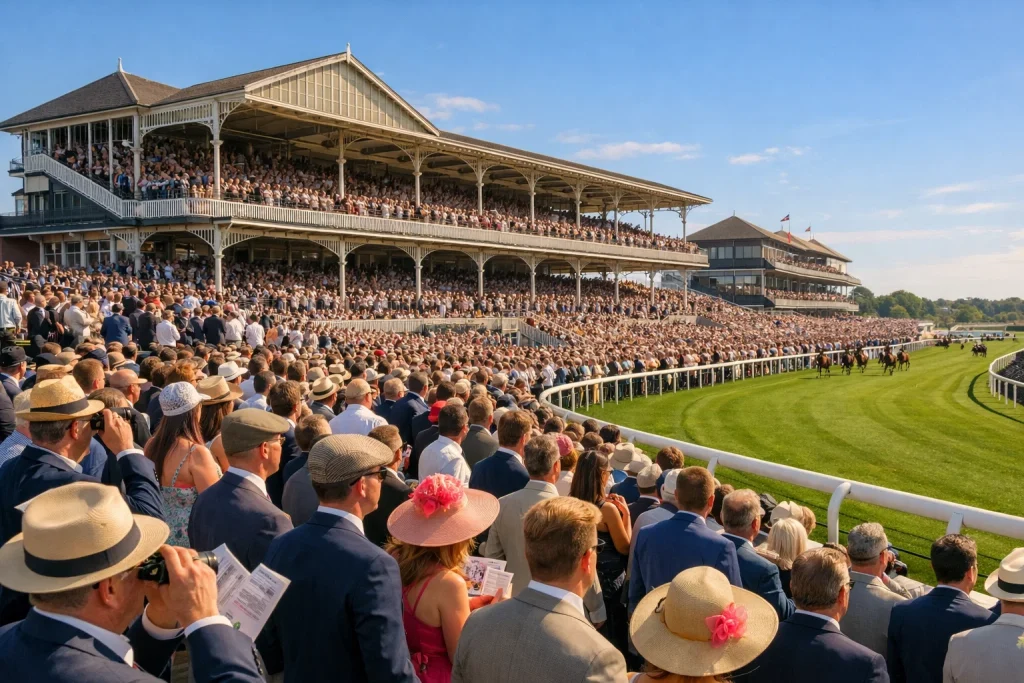
Saturday racing results carry weight that midweek fixtures cannot match. When the weekend arrives, British racing concentrates its best cards, biggest fields, and most valuable prizes into a single afternoon. The results flowing from Saturday meetings shape form assessments, settle ante-post markets, and provide the talking points that sustain conversations until the following weekend.
The rhythm feels different. Where Tuesday racing at Wolverhampton might attract dedicated punters and professionals, Saturday brings the broader audience: casual bettors placing weekend accumulators, racing fans who cannot follow the sport during working hours, families treating a day at the races as entertainment rather than investment. This expanded audience drives larger betting pools, more competitive markets, and results that genuinely matter beyond the racing bubble.
Television coverage amplifies Saturday's significance. ITV Racing broadcasts the major meetings, bringing live coverage into millions of homes. The races they televise become the races everyone discusses. A Saturday Group 1 winner earns recognition that a Wednesday Listed winner—despite similar prize money—simply cannot achieve. Results from televised races enter public consciousness in ways that obscure weekday victories never manage.
For serious punters tracking Saturday's big results, the challenge combines opportunity and competition. Larger fields create more open races with more potential outcomes. But the expanded betting audience means markets are more efficient—casual money gets absorbed, but so does the sharp money that might move prices at quieter meetings. Beating Saturday markets requires understanding both the racing and the betting dynamics surrounding it.
The strategic punter treats Saturday differently from other days. Weekday racing rewards specialist knowledge of minor tracks and exposed form. Saturday racing rewards understanding of peak conditions—how horses perform under pressure, which trainers target weekend features, which jockeys raise their game for television cameras. The results themselves tell only part of the story; the context in which they occur completes the picture.
Why Saturday Horse Racing Results Stand Apart from Weekly Fixtures
The numbers tell the story immediately. According to the Racecourse Association, Saturday fixtures in 2024 attracted an average attendance of 6,480—nearly double the weekday average. Across 272 Saturday fixtures, that consistent pull demonstrates the day's unique appeal. People who would never consider taking a Wednesday afternoon off work happily spend Saturdays at Ascot, York, or Cheltenham.
This concentration of audience creates a feedback loop. Because crowds attend on Saturdays, racecourses schedule their best racing for Saturdays. Because the best racing runs on Saturdays, crowds attend. Trainers target Saturday features when plotting campaigns. Owners want their horses running when friends and family can watch. The entire ecosystem orients around the weekend.
David Armstrong, CEO of the Racecourse Association, framed the picture clearly: "2024's annual attendance figures demonstrate a year of consolidation, which is particularly encouraging considering the sport is in the midst of undertaking significant measures to enhance the product on offer. Given the wider economic difficulties impacting households across the country, and the increased amounts of on-demand domestic entertainment, these figures give us cause for optimism."
That optimism reflects Saturday's resilience. When household budgets tighten, discretionary spending on racing attendance falls—but Saturday attendance holds up better than midweek. The day functions as an event, a social occasion, a reason to gather with friends. Weekday racing competes with work obligations and routine responsibilities. Saturday racing competes with other leisure activities and often wins.
The quality concentration matters for results analysis. Saturday fields typically feature better horses than equivalent midweek contests. A Class 3 handicap on Saturday at Newbury might attract runners who would face Class 2 company at Kempton on Wednesday. This compression means Saturday results represent stiffer tests. A horse beaten at the weekend might still have leading claims when dropped to midweek competition.
Prize money follows the pattern. Saturday features carry enhanced purses that attract better entries. The additional television revenue and betting turnover justify larger investments. Results from well-funded Saturday races therefore carry more weight when assessing form—the horses were competing for prizes worth winning, which generally means they were trying.
The competitive intensity shapes jockey bookings too. Leading riders concentrate their Saturday efforts on the best mounts at the best meetings. Champion jockeys like Oisín Murphy, William Buick, and Ryan Moore ride where the opportunities are richest. Their presence at Saturday meetings adds another quality layer—not only are the horses better, but the riders steering them are too. Results reflecting top-jockey performances carry implications that ordinary bookings cannot match.
Premier Fixtures and Quality Racing
The British Horseracing Authority's Premier Racing concept formalises what everyone already knew: some fixtures matter more than others. Premier fixtures receive enhanced investment, better race programming, and deliberate scheduling to avoid clashes with competing meetings. Saturday hosts the lion's share of these headline cards.
The clash reduction represents genuine progress. According to the BHA Racing Report 2024, races clashing before 5pm on Saturdays fell from 11.1% in 2022 to just 5.8% in 2024. That improvement means better viewing experiences—fewer difficult choices between simultaneous races—and cleaner results data. When races run sequentially rather than concurrently, punters can follow each result before the next race begins.
Premier fixtures span both flat and jump racing throughout the year. Summer Saturdays feature quality flat racing at Ascot, York, Newmarket, and Goodwood. Winter Saturdays showcase jump racing at Cheltenham, Kempton, Sandown, and Haydock. The best horses appear at these meetings, producing results that define their respective seasons.
Identifying Premier fixtures helps prioritise attention. Not every Saturday carries equal weight. A quiet August Saturday with racing at minor tracks produces results worth monitoring but not obsessing over. A December Saturday featuring the Tingle Creek at Sandown and valuable handicaps at Cheltenham demands full engagement. Learning the calendar helps allocate analytical energy appropriately.
The Premier fixture designation also affects field sizes. Trainers send better horses to better meetings, but they also send more horses overall. A Premier Saturday handicap might attract twenty-five entries where a midweek equivalent draws fifteen. Larger fields mean more competitive results, more potential outcomes, and more betting opportunities. The quality-quantity combination makes Premier Saturday results particularly valuable for form students.
Feature races anchor Premier fixtures. These are the contests around which entire meetings revolve: the big handicaps, the Group races, the championship events. Results from feature races receive extensive media coverage, detailed post-race analysis, and replay broadcasts. Horses who win features become talking points. Their subsequent entries attract attention in ways that midweek winners cannot replicate.
The scheduling of Premier fixtures follows careful logic. Major meetings avoid direct competition where possible. When Ascot hosts a significant Saturday, Newmarket might stage supporting racing rather than competing headline events. This coordination helps punters who want to follow top-level action without impossible scheduling conflicts. Results from coordinated Saturdays tell clearer stories than chaotic fixture clashes would allow.
Prize money distribution on Premier Saturdays reveals racing's priorities. A single feature race might offer more in prize money than an entire midweek card. This concentration attracts entries from top yards who target the biggest prizes. Results from well-funded Premier features therefore reflect genuine competition among horses worth the investment of running—not training exercises or experience-building outings.
The Big Races Worth Following
Saturday feature races divide into categories that serve different analytical purposes. Group races establish class hierarchies. Big handicaps test the assessor's ratings. Television features create narrative focal points. Each type produces results worth understanding differently.
Group races on Saturdays attract the best horses in training. A Saturday Group 1 might feature the season's leading contenders meeting for championship honours. Results here settle arguments about which horse deserves favouritism for upcoming targets. The King George at Ascot in July, the Champion Stakes in October, the Champion Hurdle trial at Haydock in November—these Saturday features produce results that reshape markets immediately.
Valuable handicaps create Saturday's most open betting heats. Races like the Stewards' Cup, the Cambridgeshire, the November Handicap, and various Premier Handicaps throughout the year attract maximum fields of competitive horses. Results frequently deliver double-figure prices. The unpredictability makes these races irresistible to punters seeking big returns from modest stakes.
Television features receive coverage regardless of prize money or technical classification. ITV Racing selects races that make good television: competitive, visually appealing, featuring recognisable names. A Saturday Listed race broadcast live attracts more attention than a midweek Group 3 that nobody watches. Results from televised races carry disproportionate weight in public consciousness simply because more people see them.
The timing of feature races follows predictable patterns. Broadcasters schedule major races for optimal viewing slots—typically mid-afternoon when audiences peak. Results from 3pm and 3.30pm races generate more discussion than results from opening or closing races. Understanding this timing helps punters track the races that matter most while managing the volume of Saturday racing.
Feature races also attract international competitors who bypass lesser fixtures. French, Irish, and occasionally American challengers appear for Saturday Group races and valuable handicaps. Results involving international horses require careful interpretation—their form exists in different contexts, making direct comparison challenging. But their presence confirms the race's significance and the quality of competition.
Trainers plan entire campaigns around Saturday features. A horse might run in quieter midweek races to prepare for a specific Saturday target. Understanding these campaign patterns helps interpret results: the midweek performance was preparatory; the Saturday result reveals the horse's true level. Conversely, horses campaigned mainly on Saturdays may lack experience when dropped to midweek company—their form requires context about where and when it was achieved.
The follow-up to Saturday features often proves as valuable as the races themselves. Post-race interviews reveal trainer intentions. Immediate entry announcements signal confidence or otherwise. Horses who win Saturday features often appear in ante-post markets for future targets within hours. Tracking these developments extends the value of Saturday results beyond simple outcome recording.
Attendance Patterns and What They Mean
Racecourse attendance figures reveal more than simple popularity. They indicate where the sport's audience concentrates, which meetings generate atmosphere, and—by extension—which results carry cultural weight beyond betting slips. The Racecourse Association data showing 4,799,730 total visitors in 2024 breaks down into patterns that inform Saturday racing analysis.
Saturday attendance dominates. The 272 Saturday fixtures attracted larger crowds per meeting than any other day. Those 6,480 average attendees create atmosphere that affects racing itself. Horses respond to crowd noise. Jockeys feel pressure from grandstands full of watching eyes. Results from well-attended Saturday meetings reflect racing in its most intense form.
Major Saturday fixtures draw crowds that dwarf everyday racing. Royal Ascot Saturdays, Derby Day, Gold Cup afternoon at Cheltenham—these events attract tens of thousands. The concentrated attention affects everything from betting markets to post-race coverage. Results from these peak-attendance Saturdays echo through the sport for months.
Attendance correlates with result quality, though not perfectly. Well-attended meetings generally feature better racing, attracting crowds because they matter. But some quieter Saturday fixtures produce form as reliable as their busier counterparts. A Saturday at Haydock in November might draw modest crowds compared to Royal Ascot, but its results establish crucial form lines for the jump season.
Seasonal patterns shape Saturday attendance. Summer flat racing draws casual crowds seeking sunshine and social occasions. Winter jump racing attracts dedicated fans willing to brave cold and rain. Results from each context carry different character. Summer Saturday results often involve horses whose owners and trainers prioritise the social calendar. Winter Saturday results reflect hardcore campaign planning.
The attendance recovery since pandemic restrictions ended shows Saturday's resilience. While overall figures remain slightly below 2019 peaks, Saturday meetings recovered fastest. The day retains its cultural position as racing's showcase moment—the time when the sport presents its best face to the widest audience.
Weather plays a particular role in Saturday attendance. A sunny June Saturday at Ascot becomes a social event regardless of the racing quality. A wet November Saturday at Wetherby attracts only committed racing fans. These composition shifts affect betting patterns—sunny Saturdays bring more recreational money, while wet Saturdays concentrate serious punters. Results from each scenario require different interpretive frameworks.
Corporate hospitality concentrates on Saturdays too. Companies booking racecourse facilities prefer weekends when clients can attend without work disruption. This corporate presence adds a layer of spectators who may bet recreationally but lack deep racing knowledge. Their accumulator bets and favourite-backing behaviour affect market formation, sometimes creating opportunities for form-focused punters to find overlooked value.
Saturday Betting Behaviour
Saturday transforms betting markets. The casual punters who appear only at weekends bring money that moves prices differently from sharp weekday action. Understanding these patterns helps serious bettors navigate Saturday's big results more effectively.
Mobile betting dominates across all days, but Saturday amplifies the trend. According to the Gambling Commission, over 70% of online gambling occurs on mobile devices. Saturday's social context—pub gatherings, racecourse attendance, sofa sessions with friends—naturally suits mobile betting. Results flow to phones; bets flow back through the same devices.
Accumulator betting peaks on Saturdays. Casual punters enjoy building multi-race selections with small stakes and large potential returns. This accumulator money creates specific market dynamics: short-priced favourites attract disproportionate support as punters seek "bankers" for their accumulators. Results that upset these favourites produce outsized market reactions.
The pools also swell on Saturdays. Tote betting—Placepots, Scoop6, Jackpots—attracts recreational players who enjoy lottery-style returns without needing detailed form knowledge. Pool dividends on Saturday often exceed weekday equivalents simply because more money enters the pools. Results that trigger pool payouts generate their own excitement separate from standard win betting.
Liquidity matters for exchange bettors. Betfair and other exchanges see Saturday volumes that dwarf midweek turnover. More money in the market means better prices, tighter spreads, and more opportunities for sophisticated strategies. Results on Saturday also settle faster on exchanges because the volume of matching bets accelerates processing.
The betting peaks typically occur between 2pm and 4pm—coinciding with television coverage and feature race timing. Early Saturday races see modest turnover. The big afternoon races attract the week's largest individual race markets. Evening racing, where it exists on Saturdays, draws dedicated punters but loses the casual crowd. Results from peak-time races therefore reflect the most competitive betting markets.
Price movements on Saturday follow distinctive patterns. Early prices set on Friday evening and Saturday morning often shift significantly as recreational money arrives. Horses popular with casual punters—those with appealing names, famous trainers, or recent media coverage—attract support regardless of pure form merit. Shrewd punters sometimes find value opposing these publicly favoured runners.
The aftermath of Saturday results affects markets for days. A convincing Saturday winner might see immediate price cuts for future targets. A beaten favourite faces questions that suppress support in subsequent races. The impact ripples through midweek betting and into the following Saturday's markets. Results do not simply record what happened—they reshape expectations for what comes next.
In-play betting reaches its weekly peak on Saturday afternoons. Punters watching television coverage place bets as races unfold, reacting to how horses travel and how events develop. This in-running activity creates post-race market effects too—a horse who traded short in-play before fading might retain support despite finishing poorly, while one who never travelled but plugged on for third might face longer prices next time despite the apparently acceptable result.
Best odds guaranteed promotions run most generously on Saturdays, when bookmakers compete for recreational business. These offers mean punters taking early prices on Saturday features often receive enhanced returns when starting prices exceed their bet. The promotions concentrate on feature races and televised events—another reason why Saturday results from major races affect subsequent betting differently from obscure midweek outcomes.
Planning Your Saturday Racing
Approaching Saturday racing systematically improves both enjoyment and results tracking. The volume of racing demands prioritisation—you cannot follow everything closely, so identifying what matters most helps focus attention where it counts.
Start with the fixture list early in the week. Most racing publications and websites release Saturday cards by Wednesday, allowing preliminary assessment of which meetings look strongest. Premier fixtures deserve priority. Major handicaps warrant detailed study. Quieter fixtures can receive lighter attention unless specific horses of interest are running.
Feature race timing structures the day. Note when the big races run—typically between 2.30pm and 4pm—and plan backwards. Earlier races provide clues about ground conditions and track biases that inform feature race assessments. Watching or monitoring opening races pays dividends even when they are not individually significant.
Results tracking requires real-time attention during peak hours. Multiple meetings running simultaneously means results arrive in clusters. Configuring notifications or following live text commentary helps maintain awareness without requiring constant screen watching. The results that matter most—feature races, horses you have backed, horses you are following—deserve immediate attention. Others can be reviewed later.
Post-race analysis benefits from Saturday's extensive coverage. Replays appear quickly on multiple platforms. Expert analysis accompanies major results within hours. Social media discussion highlights angles you might have missed. The attention Saturday racing receives means more resources exist for understanding results than for any midweek equivalent.
Looking ahead matters too. Saturday results shape the following week's entries and markets. Tracking which horses emerge from Saturday's big results with entries in future features helps anticipate betting opportunities before markets form. The best Saturday results analysis connects backwards to historical form and forwards to future engagements—placing each result in its proper context within ongoing racing narratives.
Building Saturday routines helps maintain consistency. Regular punters often develop personal rhythms: studying form on Friday evening, checking morning markets on Saturday, watching television coverage through the afternoon, reviewing results and replays on Saturday evening. This structure ensures nothing important gets missed while preventing the day from becoming overwhelming.
Recording Saturday results proves valuable over time. Whether through spreadsheets, notebooks, or specialised software, tracking outcomes creates a personal database that supplements official records. Noting not just results but observations—how horses ran, track conditions, anything unusual—builds institutional memory that informs future assessments. Saturday results deserve this extra attention because they matter more. The horses winning Saturday features are the horses you will encounter repeatedly in significant races throughout the season.
The cumulative effect of sustained Saturday attention compounds over seasons. Patterns emerge: which trainers excel at specific meetings, which jockeys deliver under pressure, which courses produce predictable results versus chaotic upsets. This accumulated knowledge creates advantages invisible to casual observers. The punter who has tracked every significant Saturday for three years understands the landscape differently from someone dipping in occasionally. That understanding translates into better assessments, sharper betting, and ultimately, better returns from Saturday's big results.
